





Morton’s Neuroma Relief & Treatment
The good news is, relieving the symptoms of Morton’s Neuroma doesn’t usually require a trip to the doctor. Instead, you’ll find that Morton’s Neuroma relief treatment is easily achieved at home. Some of the most common ways to relieve discomfort or pain from this condition include:
- Resting and raising your foot when you can.
- Holding an ice pack against the affected area every few hours, for around 20 minutes.
- Taking painkillers, such as paracetamol or ibuprofen.
- Changing your footwear to avoid heels or tight-fitting shoes.
- Weight loss may also help to relieve pain in those who are overweight.
- Purchasing and using orthotic insoles or pads for Morton’s Neuroma
How to Help Morton’s Neuroma Symptoms
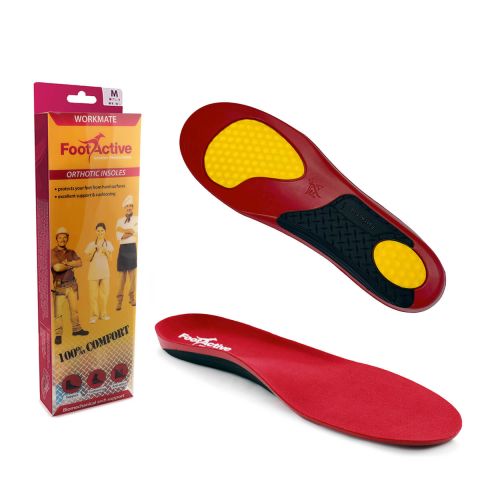
Orthotic insoles are a simple Morton’s Neuroma treatment that provides support to the foot where needed, preventing the metatarsals from dropping. This helps to reduce and prevent excess squeezing of the nerve, relieving the pain, tingling, numbness, and other symptoms associated with Morton’s Neuroma.
While you should avoid high or tight-fitting shoes, if you do need or want to wear shoes with a low to medium height heel, FootActive Catwalk can help provide Morton's Neuroma relief. They provide the right support and help to distribute the pressure experienced through your foot from this type of footwear.
For normal flat shoes, we recommend FootActive Metatarsalgia Full Length as this insole features a metatarsal raise to reduce excess pressure to the ball of your foot. FootActive Comfort features slight metatarsal support and is another option for ball of foot pain.
If Morton’s Neuroma insoles do not prove to be successful in relieving the symptoms, you may need to visit your GP. You should visit your doctor if:
- You struggle with everyday activities due to severe pain.
- The pain is getting worse or returns.
- You don’t get any relief from pain within two weeks.
- You’re experiencing increasing numbness in the foot.
- You have diabetes – any foot problems may be more serious when you suffer from diabetes.
If the above Morton’s Neuroma treatment options don’t prove successful, you may need to visit your GP. You should visit your doctor if:
- You struggle with normal everyday activity due to severe pain.
- The pain is getting worse or returns.
- You don’t get any relief from pain within two weeks.
- You’re experiencing increasing numbness in the foot.
- You have diabetes – Any foot problems may be more serious when you suffer from diabetes.
Morton's Neuroma FAQs
What is Morton’s Neuroma?
Morton’s Neuroma is a condition where the tissue around one of the nerves in our toes starts to thicken and ‘squeezes’ the dorsal digital nerve. This can cause a sharp and burning pain to the ball of the foot, commonly between the third and fourth toes. Using insoles or pads for Morton’s Neuroma can be an effective way to provide pain relief and support to your foot.
What are the symptoms of Morton’s Neuroma?
The first sign of Morton’s Neuroma tends to be a tingling sensation between your toes (usually the third and fourth). Other symptoms of Morton’s Neuroma include:
- Shooting pains in the ball of the foot or base of the toes.
- Feeling like a pebble is permanently in your shoe.
- A burning or numbing sensation in your toes.
- The pain worsens when walking or wearing tight shoes.
What causes Morton’s Neuroma?
Unfortunately, doctors do not know the exact cause of Morton’s Neuroma. They believe it may have something to do with the nerve to the toe being stretched or injured in some way.
Other factors that may increase the likelihood of Morton’s Neuroma are:
- Wearing tight shoes or high heels that apply pressure to the ball of the foot and the toes.
- High-impact sports that can cause stress on the feet.
- Having flat feet, high arches or misshapen toes can also increase the chances of Morton’s Neuroma.
How is Morton’s Neuroma diagnosed?
Morton’s Neuroma can be diagnosed by a doctor who has done an appropriate examination. If necessary, magnetic resonance imaging (MRI) or ultrasound testing can be used to confirm a diagnosis. It is strongly recommended to seek medical advice to determine the best methods of rehabilitation when seeking how to help Morton’s Neuroma.
Can Morton’s Neuroma get worse over time?
If untreated or treated incorrectly, Morton’s Neuroma can lead to permanent nerve damage which can be extremely painful. Using Morton’s Neuroma insoles is a quick and simple solution to help and provide much-needed comfort.
What can I do to help Morton’s Neuroma?
If you fear you may suffer from Morton’s Neuroma, it is important to first seek medical advice from your doctor. They may recommend the following:
- Wearing Morton’s Neuroma insoles or pads that will help to reduce pressure to your feet, particularly the ball of your foot. FootActive Metatarsalgia Full Length is an insole built with a metatarsal raise, specifically to reduce pressure to the ball of the foot.
- Applying a combination of foot massages and ice packs. This again is to relieve the amount of pressure in the ball of the foot. The Moji Foot is a foot massager that can be frozen for an ice massage and is a great tool for this remedy.
If none of these “DIY” remedies works effectively, your doctor may discuss the possibilities of trying the following:
- Corticosteroid shot - a shot that contains medicine to try and ease the irritated nerve.
- Decompression surgery - a method of surgery whereby areas inside the foot near the affected area are cut. This is done to reduce the amount of pressure on the nerve.
- Cold therapy - extremely cold temperatures are applied to the irritated nerve, killing some of the nerve cells. This method has a high chance to stop Morton’s Neuroma from returning.